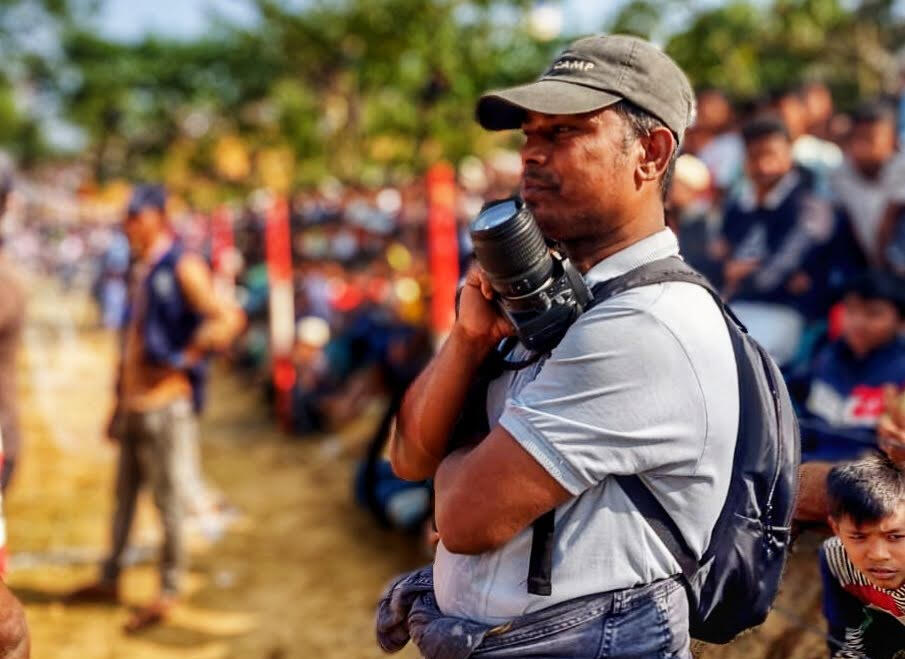
Abul Kalam Photographer
Abul Kalam is one of the most recognised Rohingya photographers working today. Often described as the doyen of Rohingya photography, he has spent decades documenting the lives and struggles of his people. Deeply connected to the community he photographs, he developed his practice through his own work and through online training with Counter Foto, a well-known photography agency in Bangladesh, as well as National Geographic training delivered through Internews. His work has been exhibited internationally and serves as both artistic expression and historical testimony. Through his camera, he records not only suffering but also dignity, memory, and survival.
Life in Exile
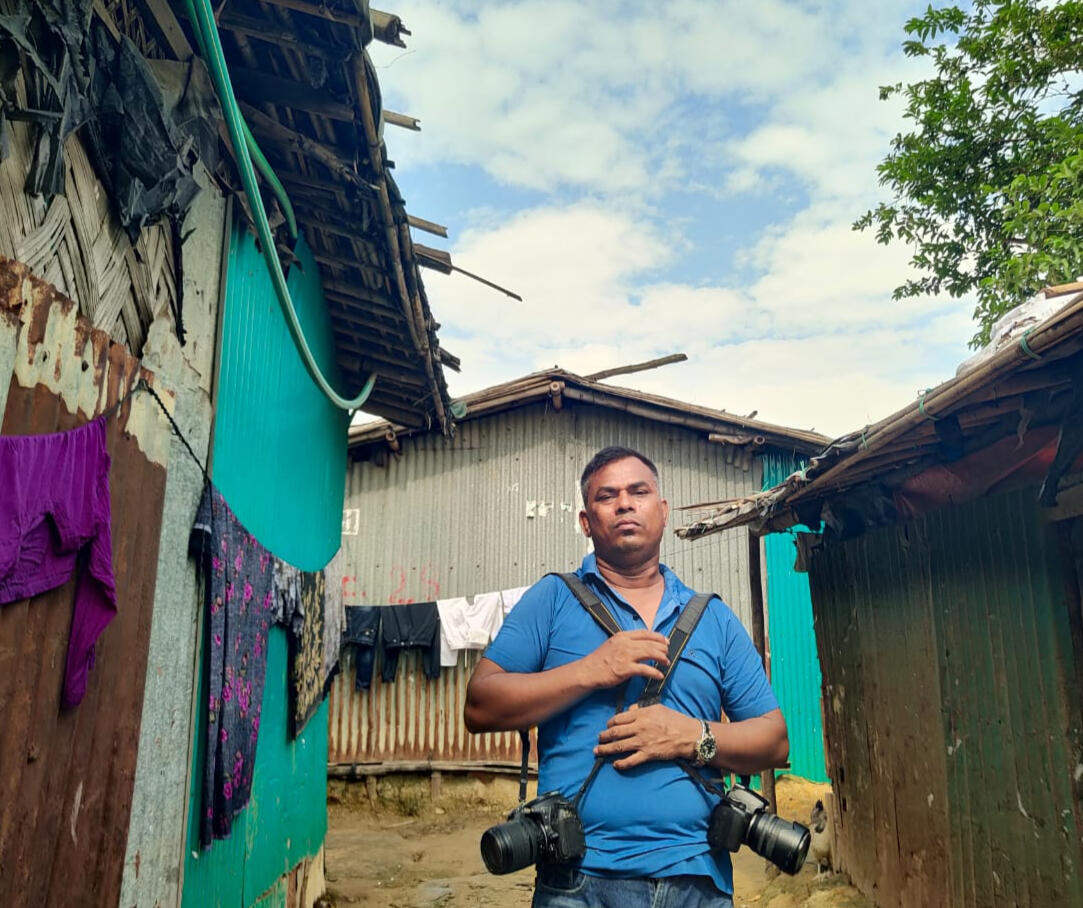
Kalam fled Myanmar as a child and has spent more than three decades living in the Kutupalong refugee camp in Bangladesh. Today, he lives there with his wife and three children. Despite the passing of years, camp life remains defined by uncertainty, restrictions, and hardship. Reflecting on refugee life, he says that "no one willingly leaves their homeland, and that refugees are ordinary people searching for safety after violence and persecution." For him, exile is not only a political condition but also a deeply personal experience.
Dreams Deferred
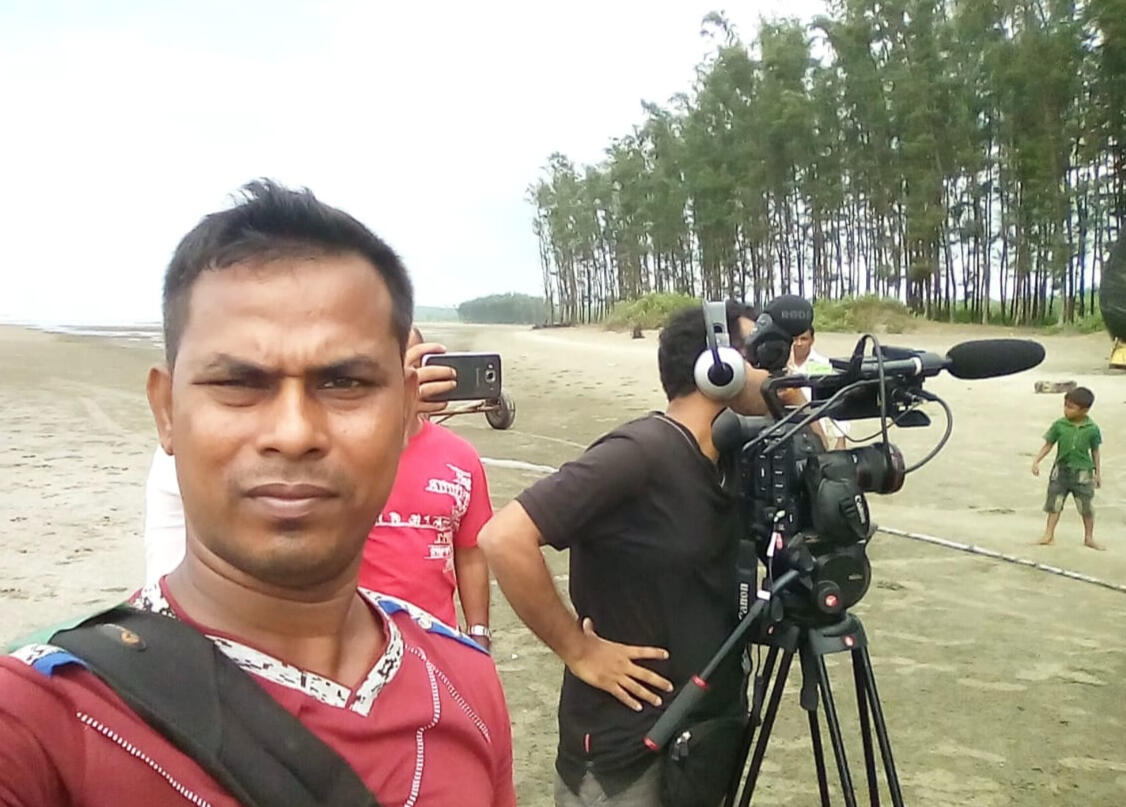
Before photography became his life's work, Kalam pursued another passion: taekwondo. He trained seriously and competed on behalf of Cox's Bazar, even travelling to Dhaka and training with leading coaches. Yet the realities of refugee life eventually forced him to abandon the sport. Financial hardship and the lack of citizenship limited opportunities that might otherwise have allowed him to progress. Looking back, he reflects that refugees often lack the secure foundation needed to fully realise their talents and ambitions.
The Right to Return
Although international attention often focuses on refugee management, Kalam believes the central issue remains unresolved: the Rohingya still do not have a safe home to return to. He argues that any lasting solution must include citizenship, equality, security, and accountability for past crimes. "Only when there is security, equality and real rights for all," he says, "can Myanmar be a true democracy, and only then can we return." Decades after fleeing Myanmar, he continues to hope for a future in which the Rohingya can return home with dignity, rights, and recognition as citizens.
Living through Uncertainty
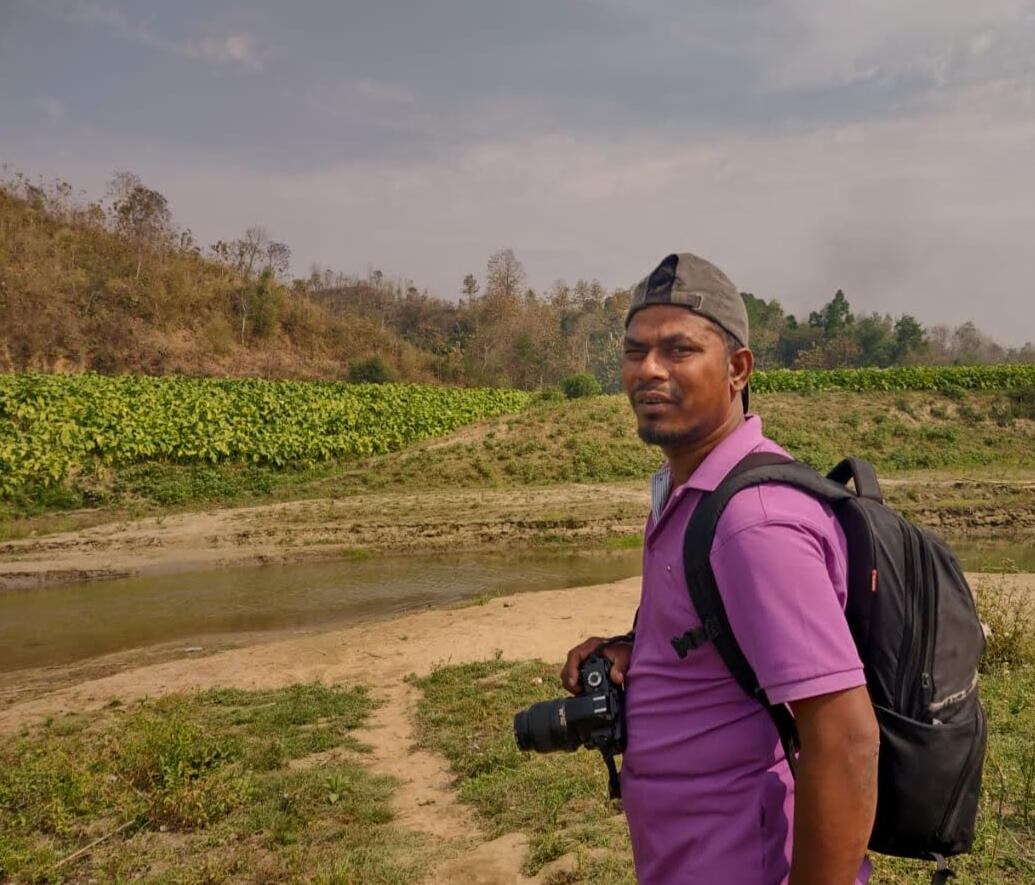
For more than thirty years, Abul Kalam has lived with the uncertainties of refugee life. He writes of a community burdened by hardship, where people struggle to support themselves while new demands and systems are imposed upon them. His work invites viewers to look beyond statistics and politics and to recognise the humanity of those living in exile.